Wheelee
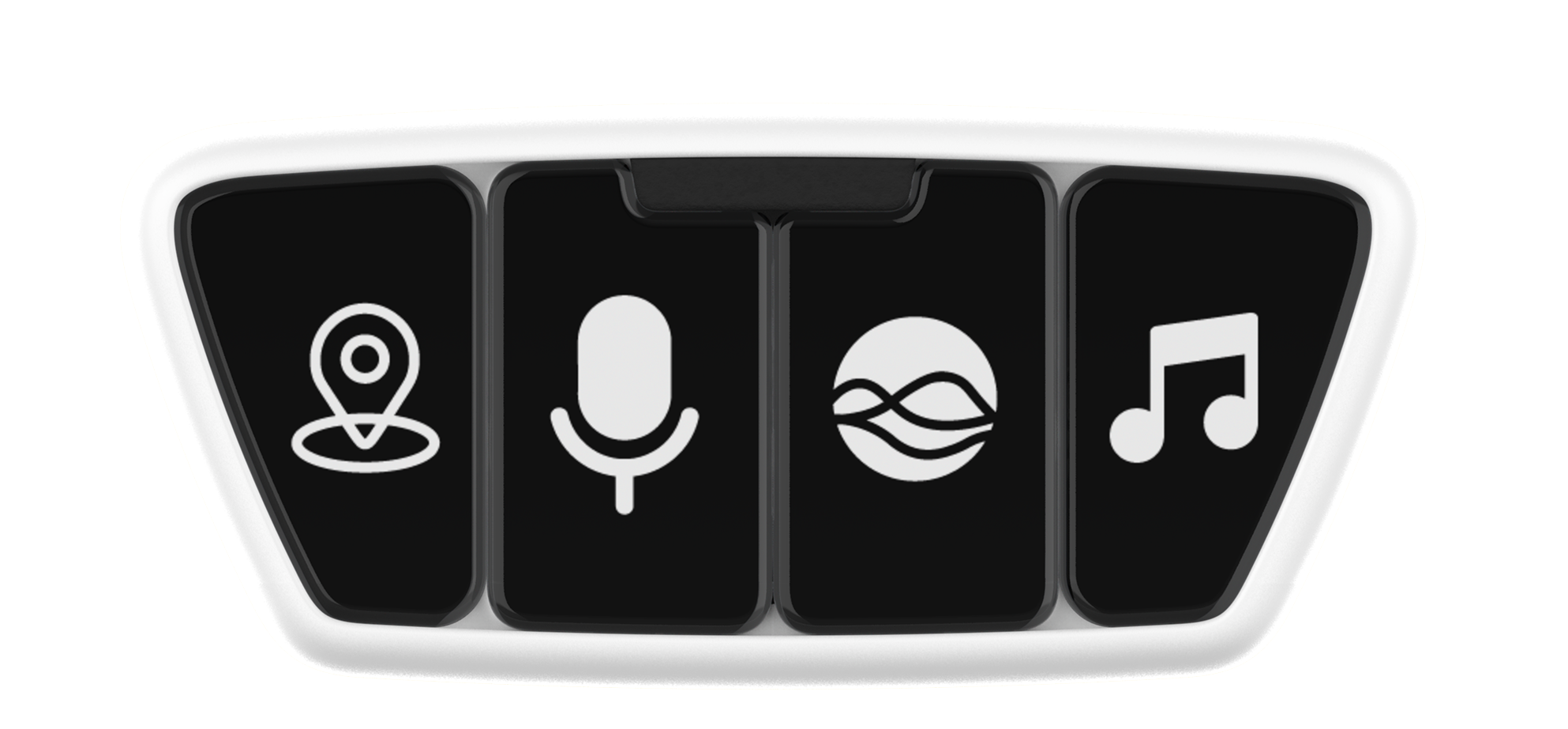
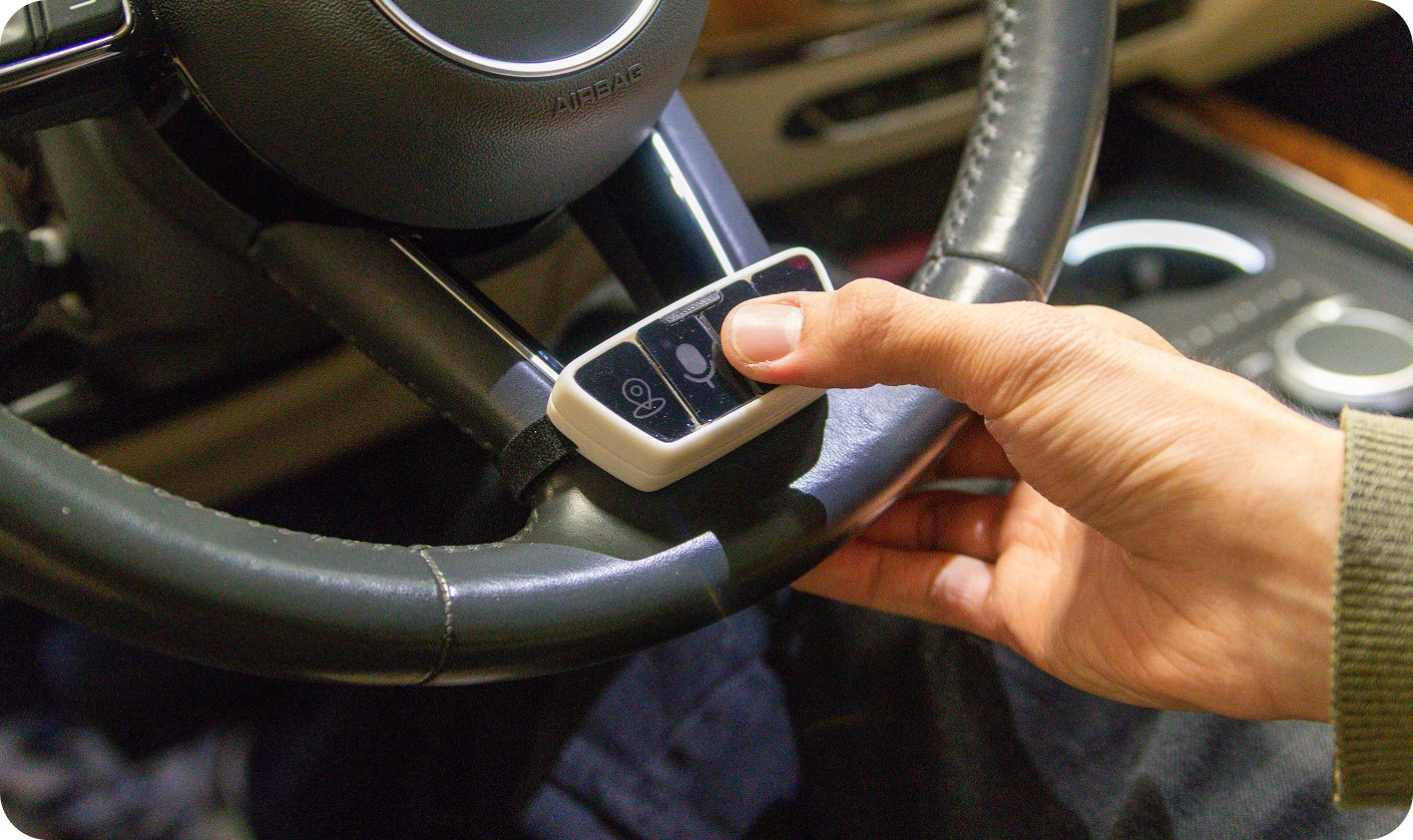
A small set of physical buttons that straps to a steering wheel spoke, so drivers can run their infotainment system without looking away from the road.
Wheelee started as a course project on ergonomics in design: creating processes and products that are comfortable, safe, and fit the user's need. I worked as researcher on a team of five alongside industrial designers.
I came in from screen work. They came in from form and material. The overlap turned out to be the whole point: a physical product's interface is where it sits, how far you reach for it, and whether your hand can find it without your eyes.
Drivers have to divert too much attention away from the road to use their infotainment systems.
We think the driving experience could be improved for drivers because today they are experiencing a distracting infotainment system which creates a less intuitive and more dangerous driving situation for them.
Physical buttons and feedback are preferred for their ease of use. They let drivers memorize location and do not force them to look away from the road.
Leaning or shifting to view the infotainment creates a major ergonomic issue, forcing the driver to adapt to the car instead of the car adapting to them.
All voice control users in testing achieved average task times of less than 15 seconds, and 10 of 13 users kept voice control in their customized button areas.
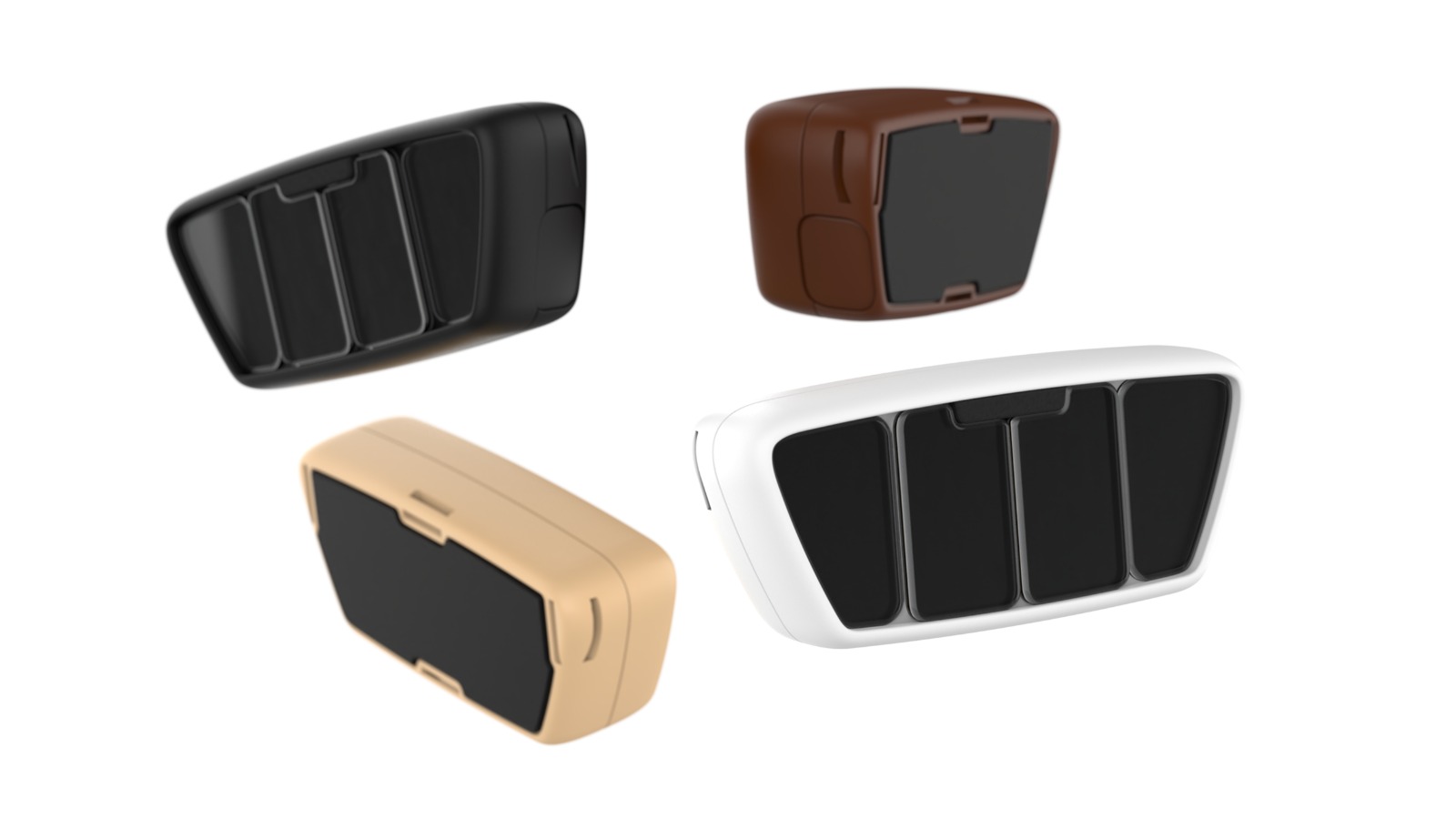
8 of 13 users mentioned the prototype was too large for their car. The design competed with the car instead of contributing to it.
“I want the buttons closer to me compared to the phone, I'd want to use the screen as little as possible”
There is no universal ban on steering wheel accessories. It depends on the state, as long as the item does not interfere with safety features on the wheel or the driver's ability to operate.
Keeping the form small enough to sit outside the airbag vicinity was what made the wheel placement defensible rather than reckless.
I ran the research alongside the industrial designers, from formative observation through summative testing with our prototype. Each decision came from what testers did:
Narrow the problem statement earlier.
Ours was vague at the start, which left us without much specific guidance for our criteria and made it hard to pick out what mattered from what we were hearing. The work got easier the moment the statement got specific.
Building the prototype was what turned the research on. Summative testing gave us a solid foundation for the refined design, and watching people fail with something we had made in real time is a lesson none of us will forget.